
They say prevention is better than cure… and the same rule applies to weather .
Kenya is already feeling the strain. Recent findings by ICPAC (Climate Center accredited by the World Meteorological Organization that provides Climate Services to 11 East African Countries) reveal prolonged drought across the country, and by December 2025, 16 of the 23 (Arid and Semi-Arid Lands) ASAL counties were experiencing drought conditions.
Behind these statistics are real lives and livelihoods. Between 2.1 and 3.5 million people in ASAL areas are currently facing Crisis (IPC Phase 3) or worse levels of acute food insecurity. This is not a distant threat; it is a present reality. And it makes one thing clear: climate preparedness and early warning systems must come before crisis response.
That urgency framed discussions on the 3rd of February 2026, as Mercy Corps AgriFin joined partners at the 12th National Climate Outlook Forum, convened by the Kenya Meteorological Department (KMD) at the Mövenpick Hotel Westlands. The forum brought together national and county governments, humanitarian actors, research institutions, and the private sector under the theme: From Crisis Response to Climate Preparedness: Inclusive Early Warning Services for All.
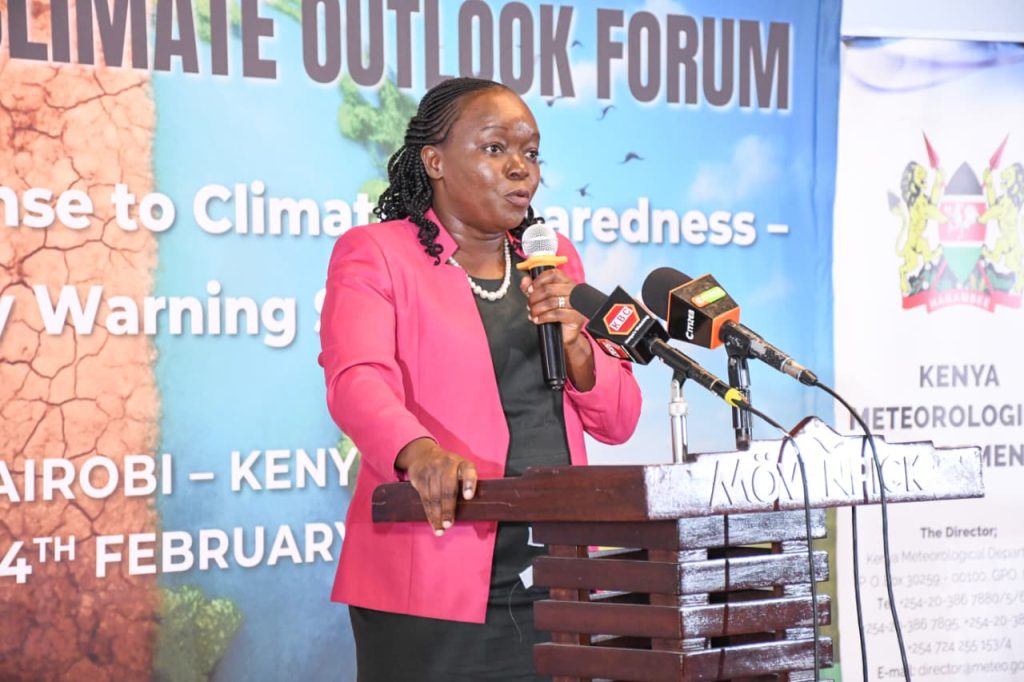
Caption : Cabinet Secretary for the Ministry of Environment, Climate Change and Forestry, Dr. Deborah Barasa presenting keynote remarks at the National Climate Outlook Forum
Delivering keynote remarks at the forum, was Dr. Deborah Barasa, Cabinet Secretary for the Ministry of Environment, Climate Change and Forestry, emphasized the need for coordinated, forward-looking action:
“We always hope for the best and anticipate the worst – ensuring we work together so that communities are not adversely affected by climate change.”
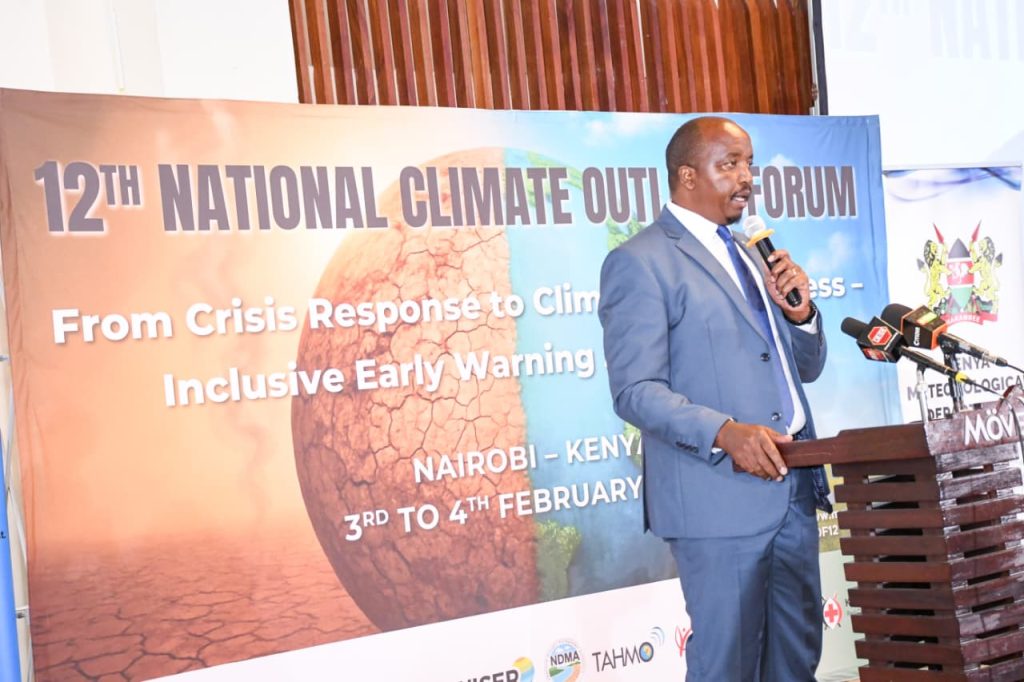
Caption: Edward Muriuki, Acting Director of KMD delivering remarks at the National Climate Outlook Forum , photo courtesy of KMD
Her message was echoed by Edward Muriuki, Acting Director of KMD, who underscored the Forum’s role as a critical national platform for connecting climate information producers with the people who rely on that information to make decisions every day , from farmers and humanitarian responders to policymakers and private sector actors.
“As climate shocks become more frequent and more severe, KMD’s mandate remains unwavering: to deliver timely, accurate, and actionable weather information that protects lives, livelihoods, and ecosystems. Early warning systems, paired with anticipatory action, are no longer a “nice to have.” They are essential infrastructure for resilience. ” – Edwin Muriuki, Acting Director KMD stated during the event.
To ensure climate information reaches those who need it most, KMD is working with partners to expand access through:
– A mobile application with a USSD option
– SMS-based climate alerts
– Intermediaries who connect directly with smallholder farmers
– County-level actors strengthening last-mile dissemination
Adding a global perspective, Elias Nure, our Global Director for Digital Climate-Smart Agriculture, highlighted the power of partnerships in turning climate data into impact:
“KMD has brought together governments, humanitarian actors, researchers, and the private sector to ensure climate information is scientifically robust, trusted, and actionable from early warning and anticipatory action to long-term resilience.”
He also shared how Mercy Corps AgriFin’s Weather and Climate Services program is helping turn preparedness into practice. For more than a decade, AgriFin has supported partners to design, test, and scale digital climate services that strengthen smallholder farmers’ productivity and resilience in the face of a changing climate.
We do this by:
– Building strong public–private partnerships
-Catalyzing innovation through data, research, and piloting
– Sharing evidence and learning across regions and partners
The bottom line: Climate resilience doesn’t happen by chance. It is built deliberately, through partnerships, preparedness, and people-centered early warning systems.